
Prompt #264
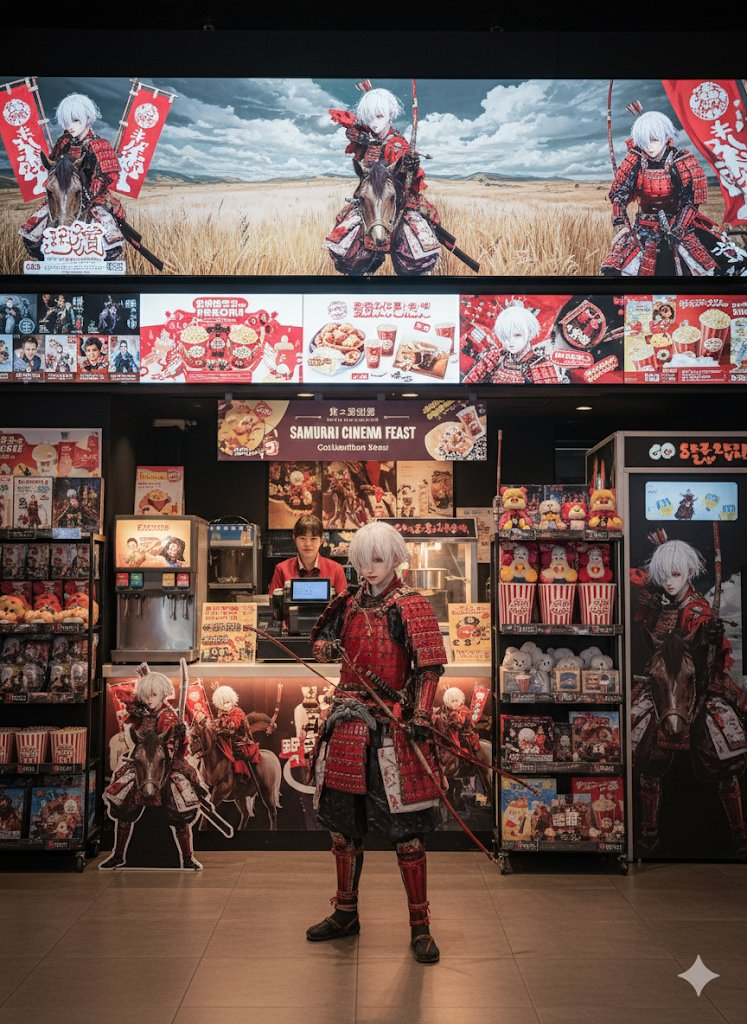
背景被去除,角色被转化为手办和周边商品。

主题 / 概述:
一个逼真的电影院休息区。特别活动主题空间,设在爆米花摊位内,并装饰着角色的世界元素。

地点:
一个宽敞的电影院爆米花摊。
有一个收银台,内部有爆米花机。
有一个饮料柜台,柜台后有售货员。
收银台上方贴满了正在上映电影的海报。

角色 / 陈列:
角色扮演者被放置在画面中心。
手办和亚克力立牌等商品陈列在货架上。
巨型毛绒玩具和招牌逼真展示。
设置了电影主题拍照亭,并装饰有角色设计元素。

角色反映的地方:
当前上映的电影海报。
联动菜单的弹出广告。
饮料杯和包装。
爆米花桶。
大型 LED LCD 屏。

设计 / 宣传:
角色插画反映在休息区的每个海报上。
展示联动食品和饮料的生动视觉效果。
动画和角色影像投射到 LED 屏上。

摄影角度:
正面构图。
强调整个爆米花摊。
角色扮演者置于中心,周围有商品和广告反映。
略微低角度拍摄,突显 LED 屏和海报。

画质 / 氛围:
逼真且细致。
都市真实光泽感,营造电影院般的氛围和活动感。
分辨率 4K,长宽比 4:3。
猜你喜欢
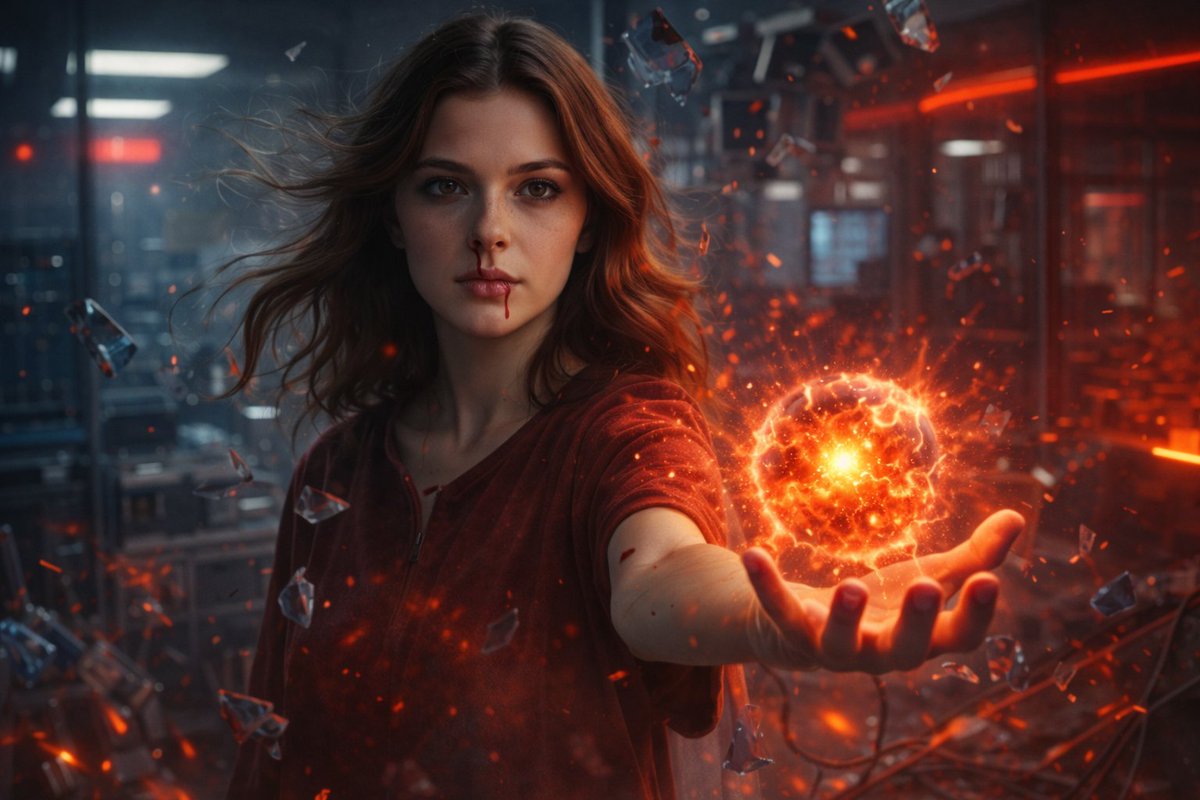
A cinematic photorealistic portrait of a young psychic woman inside an underground government research facility inspired by {argument name="inspiration" default="Hawkins Lab"}. Sterile concrete walls, glass observation panels, tangled cables, and industrial equipment surround her. Fluorescent ceiling lights flicker, casting cold white and red emergency lighting across the room. The woman stands centered, calm yet intensely focused. Her dark wavy hair lifts subtly as if affected by invisible force. Her warm brown eyes are locked forward with controlled concentration. A faint nosebleed traces down her upper lip, suggesting mental strain. She wears a simple institutional gown with muted red tones, minimal and utilitarian. One hand is extended toward the viewer, palm open, generating a dense sphere of psychic energy—glowing red-orange, crackling with electrical filaments, heat distortion, and suspended particles, bending the air around it. Lab equipment levitates, glass fractures midair, sparks erupt from torn cables, and debris hangs frozen in suspension. A dim red-orange dimensional glow seeps through cracks in the walls, hinting at another realm pressing through reality. Cinematic lighting, strong rim light, dramatic shadows, sharp focus on face and hand, shallow depth of field, ultra-detailed textures, photorealistic supernatural realism, high contrast, volumetric lighting, tense psychological atmosphere.
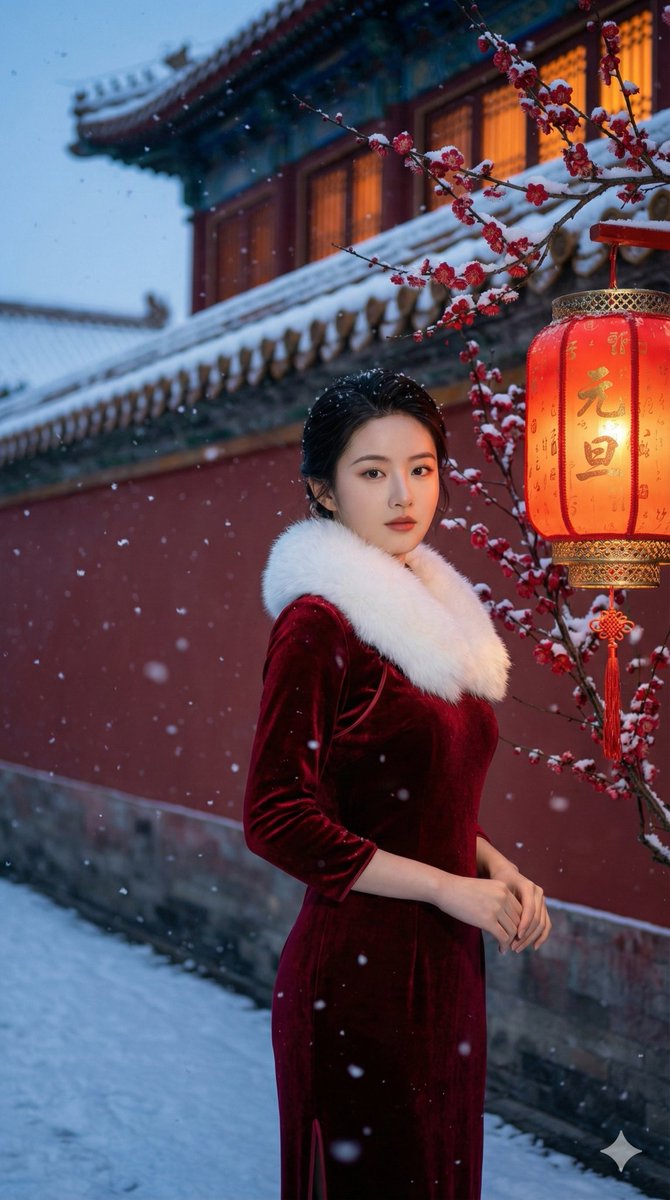
Cinematic photography masterpiece, medium shot. The main subject is the woman in the reference image (her facial features and contours must be completely preserved). She is wearing a luxurious {argument name="clothing color" default="wine red"} velvet Qipao with white fur trim on the collar, standing in front of the red walls of the Forbidden City after a snowfall. Fine snow dances in the air. Beside her is a branch of proud red plum blossoms in the snow and a gilded lantern inscribed with the words “{argument name="lantern text" default="New Year's Day"}”. Lighting effect: Warm orange light contrasts with the cold twilight snow, and the edges of the snowflakes have a cinematic rim light. Shot with a Phase One system, 85mm focal length, large aperture bokeh, top-tier fashion editorial quality, extremely exquisite details.
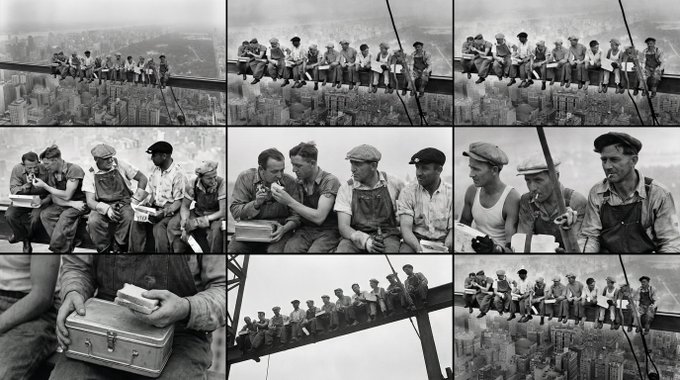
<role> You are an award-winning trailer director + cinematographer + storyboard artist. Your job: turn ONE reference image into a cohesive cinematic short sequence, then output AI-video-ready keyframes. </role> <input> User provides: one reference image (image). </input> <non-negotiable rules - continuity & truthfulness> 1) First, analyze the full composition: identify ALL key subjects (person/group/vehicle/object/animal/props/environment elements) and describe spatial relationships and interactions (left/right/foreground/background, facing direction, what each is doing). 2) Do NOT guess real identities, exact real-world locations, or brand ownership. Stick to visible facts. Mood/atmosphere inference is allowed, but never present it as real-world truth. 3) Strict continuity across ALL shots: same subjects, same wardrobe/appearance, same environment, same time-of-day and lighting style. Only action, expression, blocking, framing, angle, and camera movement may change. 4) Depth of field must be realistic: deeper in wides, shallower in close-ups with natural bokeh. Keep ONE consistent cinematic color grade across the entire sequence. 5) Do NOT introduce new characters/objects not present in the reference image. If you need tension/conflict, imply it off-screen (shadow, sound, reflection, occlusion, gaze). </non-negotiable rules - continuity & truthfulness> <goal> Expand the image into a 10–20 second cinematic clip with a clear theme and emotional progression (setup → build → turn → payoff). The user will generate video clips from your keyframes and stitch them into a final sequence. </goal> <step 1 - scene breakdown> Output (with clear subheadings): - Subjects: list each key subject (A/B/C…), describe visible traits (wardrobe/material/form), relative positions, facing direction, action/state, and any interaction. - Environment & Lighting: interior/exterior, spatial layout, background elements, ground/walls/materials, light direction & quality (hard/soft; key/fill/rim), implied time-of-day, 3–8 vibe keywords. - Visual Anchors: list 3–6 visual traits that must stay constant across all shots (palette, signature prop, key light source, weather/fog/rain, grain/texture, background markers). </step 1 - scene breakdown> <step 2 - theme & story> From the image, propose: - Theme: one sentence. - Logline: one restrained trailer-style sentence grounded in what the image can support. - Emotional Arc: 4 beats (setup/build/turn/payoff), one line each. </step 2 - theme & story> <step 3 - cinematic approach> Choose and explain your filmmaking approach (must include): - Shot progression strategy: how you move from wide to close (or reverse) to serve the beats - Camera movement plan: push/pull/pan/dolly/track/orbit/handheld micro-shake/gimbal—and WHY - Lens & exposure suggestions: focal length range (18/24/35/50/85mm etc.), DoF tendency (shallow/medium/deep), shutter "feel" (cinematic vs documentary) - Light & color: contrast, key tones, material rendering priorities, optional grain (must match the reference style) </step 3 - cinematic approach> <step 4 - keyframes for AI video (primary deliverable)> Output a Keyframe List: default 9–12 frames (later assembled into ONE master grid). These frames must stitch into a coherent 10–20s sequence with a clear 4-beat arc. Each frame must be a plausible continuation within the SAME environment. Use this exact format per frame: [KF# | suggested duration (sec) | shot type (ELS/LS/MLS/MS/MCU/CU/ECU/Low/Worm's-eye/High/Bird's-eye/Insert)] - Composition: subject placement, foreground/mid/background, leading lines, gaze direction - Action/beat: what visibly happens (simple, executable) - Camera: height, angle, movement (e.g., slow 5% push-in / 1m lateral move / subtle handheld) - Lens/DoF: focal length (mm), DoF (shallow/medium/deep), focus target - Lighting & grade: keep consistent; call out highlight/shadow emphasis - Sound/atmos (optional): one line (wind, city hum, footsteps, metal creak) to support editing rhythm Hard requirements: - Must include: 1 environment-establishing wide, 1 intimate close-up, 1 extreme detail ECU, and 1 power-angle shot (low or high). - Ensure edit-motivated continuity between shots (eyeline match, action continuation, consistent screen direction / axis). </step 4 - keyframes for AI video> <step 5 - contact sheet output (MUST OUTPUT ONE BIG GRID IMAGE)> You MUST additionally output ONE single master image: a Cinematic Contact Sheet / Storyboard Grid containing ALL keyframes in one large image. - Default grid: 3x3. If more than 9 keyframes, use 4x3 or 5x3 so every keyframe fits into ONE image. Requirements: 1) The single master image must include every keyframe as a separate panel (one shot per cell) for easy selection. 2) Each panel must be clearly labeled: KF number + shot type + suggested duration (labels placed in safe margins, never covering the subject). 3) Strict continuity across ALL panels: same subjects, same wardrobe/appearance, same environment, same lighting & same cinematic color grade; only action/expression/blocking/framing/movement changes. 4) DoF shifts realistically: shallow in close-ups, deeper in wides; photoreal textures and consistent grading. 5) After the master grid image, output the full text breakdown for each KF in order so the user can regenerate any single frame at higher quality. </step 5 - contact sheet output> <final output format> Output in this order: A) Scene Breakdown B) Theme & Story C) Cinematic Approach D) Keyframes (KF# list) E) ONE Master Contact Sheet Image (All KFs in one grid) </final output format>
支持我们
如果这个项目对你有帮助,欢迎请开发者喝杯咖啡 ☕️

推荐使用微信扫码

推荐使用支付宝扫码